The Importance of Children's Theology Books
A Follow-Up Interview with Author Jennifer Bosma
Jennifer Bosma recently visited my husband’s podcast studio and had an engaging and helpful conversation on Code Red with Zach Terry Later, he asked me what other questions I would have asked this Christian children’s book author, mother, and grandmother, as a mom and former educator. Questions started flowing out naturally and excitedly, so he said, “Well, why don’t you ask her, and write about it?” So, that’s what I did!
It may seem like no big deal, but passing down a knowledge of God to the next generation begins when children are very young- shaping their presuppositions and their worldview. God’s Word and prayer should be a normalized part of daily conversation and habits in order for children to best understand that God is someone to walk with, trust, and obey- not just a distant Creator they learn about on Sundays.
On that note, enjoy this written conversation between myself and my new friend, Jennifer Bosma:
1- Hi Jennifer! Let’s jump right in. Why is it important to teach deep biblical truth to children at an early age?
“Children should hear Scripture being spoken every day of their life, whether it is in rhythmic text, song, or prayer. Hearing Scripture daily plants the Word in a child’s heart, and they will always feel that they have known Scripture their whole life. Reading Christian books like I Know the Plans and God is Three in One helps to plant Scripture in the hearts of children and their parents. This is why it is so important to fill children’s libraries and homes with Christian texts, songs and media.”
2- So true! One thing that your book includes is lines that happily rhyme. Why is rhyming important in children’s books about biblical truth?
“When reading to children, they love to hear the cadence of a rhyme. It keeps their attention. What’s even better is when they have heard the story multiple times, they can start to finish the sentences, getting them even more engaged with the text. This way with the text of I Know the Plans and God is Three in One, their attention is kept, and they are positioned to hear the Scripture and message that coincides with each page of the text.”
It may seem like no big deal, but passing down a knowledge of God to the next generation begins when children are very young- shaping their presuppositions and their worldview. God’s Word and prayer should be a normalized part of daily conversation and habits in order for children to best understand that God is someone to walk with, trust, and obey- not just a distant Creator they learn about on Sundays.
On that note, enjoy this written conversation between myself and my new friend, Jennifer Bosma:
1- Hi Jennifer! Let’s jump right in. Why is it important to teach deep biblical truth to children at an early age?
“Children should hear Scripture being spoken every day of their life, whether it is in rhythmic text, song, or prayer. Hearing Scripture daily plants the Word in a child’s heart, and they will always feel that they have known Scripture their whole life. Reading Christian books like I Know the Plans and God is Three in One helps to plant Scripture in the hearts of children and their parents. This is why it is so important to fill children’s libraries and homes with Christian texts, songs and media.”
2- So true! One thing that your book includes is lines that happily rhyme. Why is rhyming important in children’s books about biblical truth?
“When reading to children, they love to hear the cadence of a rhyme. It keeps their attention. What’s even better is when they have heard the story multiple times, they can start to finish the sentences, getting them even more engaged with the text. This way with the text of I Know the Plans and God is Three in One, their attention is kept, and they are positioned to hear the Scripture and message that coincides with each page of the text.”
3- Yes, we all know it is easier to remember every word to a song than to any written paragraph! Let’s shift gears a little. Can you tell us more about a child’s connection with illustrations, and how pictures help them understand and remember what they read/are read aloud?
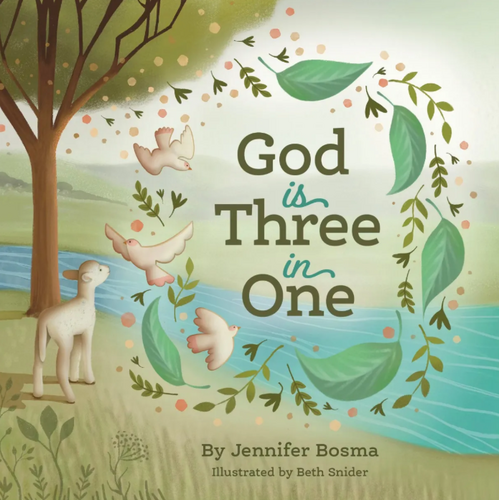
“I love this question, because I feel like my illustrator Beth Snider did an amazing job in both books! When your illustrator is a Christian, she fills the pages with an unspoken text of illustrations. A great example is how Beth illustrated with doves on the pages of God is Three in One . Throughout the book, even on the creation page, she subtly shows by the presence of a dove that the person of the Spirit was present at Creation."
The conversations this book has evoked with my own granddaughters has been exhilarating, especially on the page where the shepherd is holding his sheep across his back. This book takes a long time to read- even though the text is not long- due to the illustrated messages on each page that children pick up!
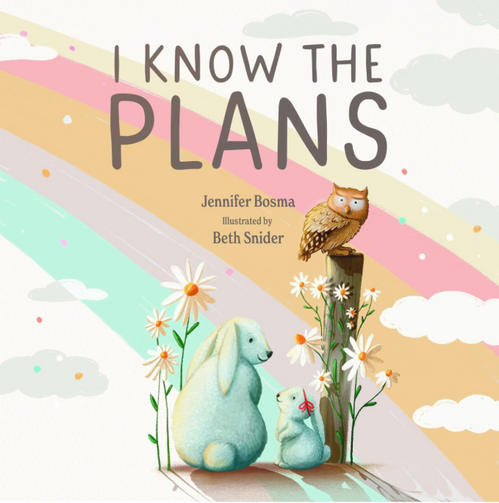
Then, in I Know the Plans, Beth brings in a muted rainbow on every page within the illustrations to tie in God’s promise on every page. These are the nuances that make the illustrations speak truth on each page, and creates the draw for children to want these books read to them.”
4- Beth’s illustrations are truly beautiful- I love all of the animals! Let’s talk now about children’s books at large. We know imagination and fictional stories are valuable for children, but when reading books with nonfiction concepts alongside fairy tales, how do parents help their children differentiate between the two types of books/stories?
“I love reading fairy tales to kids. Fairy tales actually teach lessons, morals, and problem/solution in an engaging way. As a parent or grandparent, you can also start early by telling the children the genre of a book. For example, ‘This book is non-fiction because it is truth, this book is fiction because it tells a made-up story, etc.’ Nursery rhymes are also fun because of the cadence and sing-song-like reading time. When I read these books to my own children and now grandchildren, we laugh and talk about how silly it is, that the ‘dish ran away with the spoon’.
The best part of reading books to a child from infancy is that it allows the child to enjoy reading books and having quality time with their caregiver. It also rapidly expands a child’s vocabulary because it exposes them to many words and more complex sentence structures than just conversation can do. It also helps them to understand meaning, apply this knowledge to their own vocabulary, and use the words in their own eventual language. Reading books also helps children understand problem and solution.
Good books will evoke conversation, but parents and teachers have to be careful about which books to read to kids. I have stopped reading many books aloud or changed the words (for pre-readers) when the text was beginning to bring in a concept or a fear that my kids were not worried about. If you haven’t pre-read a book, it’s ok to stop mid-read to say, ‘You know, I don’t like this book. We aren’t going to finish it.’ This goes a long way to teach children discernment and that it’s ok to stop something when the Holy Spirit tells you to stop. This is actually a great real-life learning lesson so don’t shy away from it!”
“I love this question, because I feel like my illustrator Beth Snider did an amazing job in both books! When your illustrator is a Christian, she fills the pages with an unspoken text of illustrations. A great example is how Beth illustrated with doves on the pages of God is Three in One . Throughout the book, even on the creation page, she subtly shows by the presence of a dove that the person of the Spirit was present at Creation."
The conversations this book has evoked with my own granddaughters has been exhilarating, especially on the page where the shepherd is holding his sheep across his back. This book takes a long time to read- even though the text is not long- due to the illustrated messages on each page that children pick up!
Then, in I Know the Plans, Beth brings in a muted rainbow on every page within the illustrations to tie in God’s promise on every page. These are the nuances that make the illustrations speak truth on each page, and creates the draw for children to want these books read to them.”
4- Beth’s illustrations are truly beautiful- I love all of the animals! Let’s talk now about children’s books at large. We know imagination and fictional stories are valuable for children, but when reading books with nonfiction concepts alongside fairy tales, how do parents help their children differentiate between the two types of books/stories?
“I love reading fairy tales to kids. Fairy tales actually teach lessons, morals, and problem/solution in an engaging way. As a parent or grandparent, you can also start early by telling the children the genre of a book. For example, ‘This book is non-fiction because it is truth, this book is fiction because it tells a made-up story, etc.’ Nursery rhymes are also fun because of the cadence and sing-song-like reading time. When I read these books to my own children and now grandchildren, we laugh and talk about how silly it is, that the ‘dish ran away with the spoon’.
The best part of reading books to a child from infancy is that it allows the child to enjoy reading books and having quality time with their caregiver. It also rapidly expands a child’s vocabulary because it exposes them to many words and more complex sentence structures than just conversation can do. It also helps them to understand meaning, apply this knowledge to their own vocabulary, and use the words in their own eventual language. Reading books also helps children understand problem and solution.
Good books will evoke conversation, but parents and teachers have to be careful about which books to read to kids. I have stopped reading many books aloud or changed the words (for pre-readers) when the text was beginning to bring in a concept or a fear that my kids were not worried about. If you haven’t pre-read a book, it’s ok to stop mid-read to say, ‘You know, I don’t like this book. We aren’t going to finish it.’ This goes a long way to teach children discernment and that it’s ok to stop something when the Holy Spirit tells you to stop. This is actually a great real-life learning lesson so don’t shy away from it!”
5- Thank you for explaining that so well! I hadn’t thought about what a great lesson parents and teachers give to children by choosing to stop reading a book! Before we go, one more question. How might parents use your books as a guide for explaining other biblical concepts to their children?
“In I Know the Plans, the Scripture that goes along with the text is included on the page, and by children hearing the Scripture after the rhyming explanation is read, the Scripture will start to be memorized and stored in the hearts of both children and their parents. I always struggled with memorizing Scripture if I had to sit and force it, but when I would say it over and over by reading it aloud, Scripture naturally became memorized. It is the same with most people, making the Scripture more genuine and meaningful in a person’s life. The Scriptures in this particular book show young children that God has plans for their lives as they follow Him.
In God is Three in One, I was compelled to write the book, explaining the Trinity, when my granddaughter asked me, ‘Grandma, who is the Holy Spirit?’. Later, when my daughter read the book, I was thrilled when she said, ‘This book will help parents understand the Trinity too, Mom!’ I knew I had to make it understandable from the point of view of God the Father, God the Son and God the Holy Spirit and how to invite the Holy Spirit into one’s life. The way that this book is also written in rhyme is a testament to God’s hand being the true inspiration on every page. How this happened is truly miraculous and He gets all the glory for the engaging rhymic text explaining the Trinity.
Parents who read these books may find help in explaining big, deep concepts with words their children can understand, and can carry this into any other biblical concepts their kids have questions about.
At the back of the book, I also added a ‘for further study’ page which will help parents and children dig into their Bibles to do independent biblical research. I had the help of four pastors who helped me read over and edit/clarify the concepts so young people and parents could begin to understand the Trinity.”
Thank you, Jennifer, for sharing your wisdom! To learn more about Jennifer or order these books, visit JenniferBosma.com.
“In I Know the Plans, the Scripture that goes along with the text is included on the page, and by children hearing the Scripture after the rhyming explanation is read, the Scripture will start to be memorized and stored in the hearts of both children and their parents. I always struggled with memorizing Scripture if I had to sit and force it, but when I would say it over and over by reading it aloud, Scripture naturally became memorized. It is the same with most people, making the Scripture more genuine and meaningful in a person’s life. The Scriptures in this particular book show young children that God has plans for their lives as they follow Him.
In God is Three in One, I was compelled to write the book, explaining the Trinity, when my granddaughter asked me, ‘Grandma, who is the Holy Spirit?’. Later, when my daughter read the book, I was thrilled when she said, ‘This book will help parents understand the Trinity too, Mom!’ I knew I had to make it understandable from the point of view of God the Father, God the Son and God the Holy Spirit and how to invite the Holy Spirit into one’s life. The way that this book is also written in rhyme is a testament to God’s hand being the true inspiration on every page. How this happened is truly miraculous and He gets all the glory for the engaging rhymic text explaining the Trinity.
Parents who read these books may find help in explaining big, deep concepts with words their children can understand, and can carry this into any other biblical concepts their kids have questions about.
At the back of the book, I also added a ‘for further study’ page which will help parents and children dig into their Bibles to do independent biblical research. I had the help of four pastors who helped me read over and edit/clarify the concepts so young people and parents could begin to understand the Trinity.”
Thank you, Jennifer, for sharing your wisdom! To learn more about Jennifer or order these books, visit JenniferBosma.com.
The Maximum Life Blog
My name is Zach Terry. The thoughts and opinions expressed in this blog are my own, with occasional interjections from my bride of nearly 25 years, Julie. This format of publication is meant to allow for engagement and interaction. Feel free to comment. But please, be nice.
Recent
Archive
2026
January
Cleansing the PalateThe Library of MankindSuch a Strange Way to Save the WorldLoved Like RachelCode Red | From the Army to Audiobooks — Faith, Literature, and the Making of a Voice ActorConverts and ConflictMaids and Mandrakes: Dysfunction, Departure, and Divine Grace in Genesis 30The Importance of Children's Theology BooksDealing with a Narcissist
2025
February
March
July
August
September
October
Why We Should Bless IsraelGovernment Shutdowns and God’s Blueprint for Smaller GovernmentCompassion and ConsequencesSodom, Netflix, and the Two Paths Before UsRevival Isn’t a Rumor — It’s HappeningIt’s Time to Stop Playing It SafeA New Door OpensPreach the Word. Show Your Hand.When “Love Your Neighbor” Becomes a WeaponA New Day DawningPaving the Way of Anti-ChristThe Church and the Honky-TonkMy Personal Position on Israel
November
2024
April
May
No Comments