Enemy to Ambassador
The Conversation of Saul of Tarsus
If you were asked to list the most critical moments in world history, the resurrection of Jesus rightly stands alone at the top. But the moment we’re looking at today may sit in the runner-up position. Because when Saul of Tarsus hit the dirt on the Damascus Road, God didn’t just save a sinner—He unleashed a force that would shake empires, plant churches, and write the letters that disciple us to this very hour.
Luke must have sensed the magnitude of it. He retells Saul’s conversion three times—Acts 9, Acts 22, Acts 26. In fact, over 1/12 of the book is devoted to this one individual’s conversion.
He gives more space to this single event than he does to the ascension of Christ. This isn’t a footnote in Scripture; this is a hinge of redemptive history.
And Saul’s story is not merely descriptive—it is instructive. What Jesus did in Saul, He still does in every true conversion. And if these elements are missing in your story, friend, it is not that you are backslidden; it is that you are lost.
Luke must have sensed the magnitude of it. He retells Saul’s conversion three times—Acts 9, Acts 22, Acts 26. In fact, over 1/12 of the book is devoted to this one individual’s conversion.
He gives more space to this single event than he does to the ascension of Christ. This isn’t a footnote in Scripture; this is a hinge of redemptive history.
And Saul’s story is not merely descriptive—it is instructive. What Jesus did in Saul, He still does in every true conversion. And if these elements are missing in your story, friend, it is not that you are backslidden; it is that you are lost.
Context
In Acts 8, we see the martyrdom of Stephen and the crowds laying their garments at the feet of a young man named Saul. This was significant in that it showed both approval and perhaps responsibility fell at the feet of Saul of Tarsus, as 8:1 points out.
Luke’s attention turns in chapter 8 toward the ministry of Phillip and the conversion of a Eunuch from Ethiopia. We will say more about that in a moment. Then chapter 9 returns our attention to Saul.
Luke’s attention turns in chapter 8 toward the ministry of Phillip and the conversion of a Eunuch from Ethiopia. We will say more about that in a moment. Then chapter 9 returns our attention to Saul.
Text: Saul’s Persecution and the Damascus Road Encounter
Acts 8:3 (ESV) 3 But Saul was ravaging the church, and entering house after house, he dragged off men and women and committed them to prison.
That same Greek word was used for what the animals did to humans in the Colosseum.
Acts 9:1 (ESV) 1 But Saul, still breathing threats and murder against the disciples of the Lord…
Try for a moment to see the perspective of this young Pharisee. In his mind, he was following in a noble and godly tradition.
We have no indication that Saul was under any distress about his persecution of the church. So many have the idea that the sinfulness of sin lies in a person’s visceral response to committing sin.
However, it is quite possible to sin and never feel bad whatsoever. I’ll go further than that—it is possible to sin and feel as though you are NOT sinning, in fact doing God a favor. His biggest problem was that he didn’t realize how utterly lost he really was.
Acts 9:1–2 (ESV) 1 But Saul...went to the high priest 2 and asked him for letters to the synagogues at Damascus, so that if he found any belonging to the Way, men or women, he might bring them bound to Jerusalem.
Damascus was an ancient city and the capital of the Roman Province of Syria, just north/northeast of Galilee. It was some 150 miles from Jerusalem. Apparently, word had come to Jerusalem that many of the Christians who were scattered in connection to Stephen’s death had taken up refuge in Damascus.
According to Chuck Swindoll, “Saul devised an aggressive plan to storm the city, capture the infidels, and drag them into court. Thankfully, God had a different plan.”
Imagine it if you will—Saul with the fury and hatred of a Hitler is storming toward Damascus on a Mission. Then imagine if you will another standing from the right hand of the Father, also on His way to Damascus for a Divine encounter with Saul.
Acts 9:3 (ESV) 3 Now as he went on his way, he approached Damascus, and suddenly a light from heaven shone around him.
Paul himself indicates in Acts 26:13 13 at midday, ...I saw on the way a light from heaven, brighter than the sun.
Can you imagine a light so bright that it eclipsed the burning of the Middle Eastern midday sun? Such is the revelation of the Shekinah Glory of the risen Savior.
NOW WE HAVE SAUL THE CHIEF OF SINNERS FACE TO FACE WITH JESUS THE FRIEND OF SINNERS…
That same Greek word was used for what the animals did to humans in the Colosseum.
Acts 9:1 (ESV) 1 But Saul, still breathing threats and murder against the disciples of the Lord…
Try for a moment to see the perspective of this young Pharisee. In his mind, he was following in a noble and godly tradition.
- He saw himself as an Elijah who called for the execution of the prophet of Baal.
- He saw himself as a Phineus who, in zeal for the Lord, killed the sinners.
- He saw himself like the Maccabean Rebels who rebelled against Antiochus Epiphanes.
We have no indication that Saul was under any distress about his persecution of the church. So many have the idea that the sinfulness of sin lies in a person’s visceral response to committing sin.
However, it is quite possible to sin and never feel bad whatsoever. I’ll go further than that—it is possible to sin and feel as though you are NOT sinning, in fact doing God a favor. His biggest problem was that he didn’t realize how utterly lost he really was.
Acts 9:1–2 (ESV) 1 But Saul...went to the high priest 2 and asked him for letters to the synagogues at Damascus, so that if he found any belonging to the Way, men or women, he might bring them bound to Jerusalem.
Damascus was an ancient city and the capital of the Roman Province of Syria, just north/northeast of Galilee. It was some 150 miles from Jerusalem. Apparently, word had come to Jerusalem that many of the Christians who were scattered in connection to Stephen’s death had taken up refuge in Damascus.
According to Chuck Swindoll, “Saul devised an aggressive plan to storm the city, capture the infidels, and drag them into court. Thankfully, God had a different plan.”
Imagine it if you will—Saul with the fury and hatred of a Hitler is storming toward Damascus on a Mission. Then imagine if you will another standing from the right hand of the Father, also on His way to Damascus for a Divine encounter with Saul.
Acts 9:3 (ESV) 3 Now as he went on his way, he approached Damascus, and suddenly a light from heaven shone around him.
Paul himself indicates in Acts 26:13 13 at midday, ...I saw on the way a light from heaven, brighter than the sun.
Can you imagine a light so bright that it eclipsed the burning of the Middle Eastern midday sun? Such is the revelation of the Shekinah Glory of the risen Savior.
NOW WE HAVE SAUL THE CHIEF OF SINNERS FACE TO FACE WITH JESUS THE FRIEND OF SINNERS…
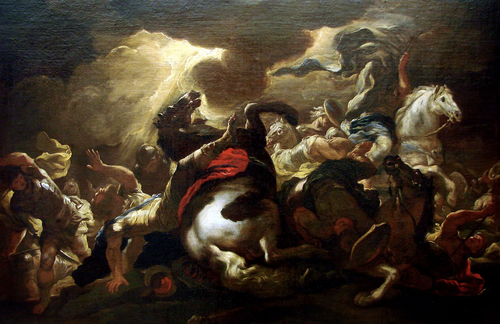
https://en.wikipedia.org/wiki/Conversion_of_Paul_the_Apostle
I want us to look at three METHODS Jesus employed to lead Saul to Salvation—these are three WEAPONS in YOUR arsenal. You should master them, you should wield them. And you should expect them to fall with a significant effect on the lost soul.
NOW—I need you to focus—I need you to ask yourself, are these three things true of your story? Can you at all relate? If not, friend, you are not backslidden; you are utterly lost. Here they are—
NOW—I need you to focus—I need you to ask yourself, are these three things true of your story? Can you at all relate? If not, friend, you are not backslidden; you are utterly lost. Here they are—
1. Conviction of Sin
Acts 9:4–5 (ESV) 4 And falling to the ground, he heard a voice saying to him, “Saul, Saul, why are you persecuting me?” 5 And he said, “Who are you, Lord?” And he said, “I am Jesus, whom you are persecuting.
Take note for a moment that our Lord’s attention was fixed on Saul. Twice he calls his name—“Saul, Saul” as in his earthly pilgrimage, he said to his friend, “Martha, Martha”. What of Saul’s comrades? His traveling companions? Their name is not uttered, at least not on this occasion. Jesus came after one man; one man must hear his voice, one man must respond. Saul, Saul was that man.
There is a call that goes out to all men. A drawing that goes to the masses. John 12:32 (NASB95) 32 “And I, if I am lifted up from the earth, will draw all men to Myself.” That calling is broad in its scope; it brings all men into accountability to God.
This is a universal calling, but oh friend, don‘t despise the more specific calling—the effectual calling of our Lord. For you see, Saul’s comrades heard something—but it was muted, murky, like a burst of thunder that accompanies a storm.... But Saul heard his name.
Don’t despise the words of our Lord in Matthew 22:14 (NASB95) 14 “For many are called, but few are chosen.” You may not understand that statement, but don’t hate that statement. You may not comprehend those words, but allow yourself to love them. Love them as you love John 3:16, for they are given of the same Lord.
May I ask you a question? Have you personally sensed a calling from the Savior? Has there been something beyond head knowledge in your experience with Christ?
There is no salvation apart from this calling. Oh, I’ll get saved when I get good and ready, someone says—friend, let me remind you of the words of Jesus.
John 6:44 (NASB95) 44 “No one can come to Me unless the Father who sent Me draws him; and I will raise him up on the last day.
You will get saved when the Father draws you to get saved, or you will not get saved at all. That is why we take what happens here VERY seriously.
I appeal to you as God’s workman, knowing the fear of God, I persuade you to come to Christ—But God’s call is different, as High King of Heaven, he issues a Divine Summons.
NOW—Have you sensed such a personal, divine calling to salvation?
I want them to feel as though their names have been called.
There is an assurance that comes from personal experience, which nothing else can give you.
Faith is not merely theoretical for Saul; it was experiential.
There must be a personal calling...
Take note for a moment that our Lord’s attention was fixed on Saul. Twice he calls his name—“Saul, Saul” as in his earthly pilgrimage, he said to his friend, “Martha, Martha”. What of Saul’s comrades? His traveling companions? Their name is not uttered, at least not on this occasion. Jesus came after one man; one man must hear his voice, one man must respond. Saul, Saul was that man.
- As in the day he called for Lazarus from the grave, with a specific, effectual—“Lazarus come forth” he calls for Saul from the grave of his sin.
- As he summoned Zacchaeus by name to “come down from the tree”, he called, “Saul, Saul”.
There is a call that goes out to all men. A drawing that goes to the masses. John 12:32 (NASB95) 32 “And I, if I am lifted up from the earth, will draw all men to Myself.” That calling is broad in its scope; it brings all men into accountability to God.
This is a universal calling, but oh friend, don‘t despise the more specific calling—the effectual calling of our Lord. For you see, Saul’s comrades heard something—but it was muted, murky, like a burst of thunder that accompanies a storm.... But Saul heard his name.
Don’t despise the words of our Lord in Matthew 22:14 (NASB95) 14 “For many are called, but few are chosen.” You may not understand that statement, but don’t hate that statement. You may not comprehend those words, but allow yourself to love them. Love them as you love John 3:16, for they are given of the same Lord.
May I ask you a question? Have you personally sensed a calling from the Savior? Has there been something beyond head knowledge in your experience with Christ?
There is no salvation apart from this calling. Oh, I’ll get saved when I get good and ready, someone says—friend, let me remind you of the words of Jesus.
John 6:44 (NASB95) 44 “No one can come to Me unless the Father who sent Me draws him; and I will raise him up on the last day.
You will get saved when the Father draws you to get saved, or you will not get saved at all. That is why we take what happens here VERY seriously.
I appeal to you as God’s workman, knowing the fear of God, I persuade you to come to Christ—But God’s call is different, as High King of Heaven, he issues a Divine Summons.
NOW—Have you sensed such a personal, divine calling to salvation?
- OH, I desire for my son that he knows more than facts about his father’s God.
- I desire for my daughters that they know more than trivia concerning scripture.
I want them to feel as though their names have been called.
There is an assurance that comes from personal experience, which nothing else can give you.
- What can an atheist say to Saul?
- What sway does a skeptic have on this man?
- What demon can make this man doubt?
Faith is not merely theoretical for Saul; it was experiential.
There must be a personal calling...
2. Confession of Lostness
5 And he said, “Who are You, Lord?”
This word for Lord can simply be the equivalent of our term, “sir,” but it can also be a word to refer to divinity. In our case, it is almost certainly the latter.
This was an honest confession that Saul had come face to face with God, and he did not know Him.
He has come to that blessed place of actual, realized lostness. Nothing is more pitiful than a lost man who thinks he is saved. The greatest favor God can do for some people is to get them lost. Then and only then can He get them saved.
And He said, “I am Jesus whom you are persecuting,
Saul was struck with the realization that Jesus Christ so associated himself with His people that for a man to persecute a follower of Christ, he was persecuting Christ himself.
Apparently, Jesus meant it when he said, Matthew 25:40 (NASB95) 40 “... ‘Truly I say to you, to the extent that you did it to one of these brothers of Mine, even the least of them, you did it to Me.’
In Acts 26:14 Paul gives us another quote from our Lord on this occasion. 14 “... It is hard for you to kick against the goads.’
Goads were 8ft long sticks used by ox drivers; one end was sharp and pointed, the other was flat for cleaning the plow. The driver would point the Ox Goads toward the business end of the animal, and from time to time, in ignorance, the Oxen would kick back against the goads, only increasing their pain and delaying the inevitable.
Jesus said, “Saul, that’s what you are doing”. It was reminiscent of the advice of Saul’s rabbi, Gamaliel. Who warned the Jewish leaders not to battle against these disciples lest they be found battling against God himself.
What a kind statement this was from our Lord—Saul, the path of life you have chosen has only produced pain, and it will increasingly produce pain till you repent.
This word for Lord can simply be the equivalent of our term, “sir,” but it can also be a word to refer to divinity. In our case, it is almost certainly the latter.
This was an honest confession that Saul had come face to face with God, and he did not know Him.
He has come to that blessed place of actual, realized lostness. Nothing is more pitiful than a lost man who thinks he is saved. The greatest favor God can do for some people is to get them lost. Then and only then can He get them saved.
And He said, “I am Jesus whom you are persecuting,
Saul was struck with the realization that Jesus Christ so associated himself with His people that for a man to persecute a follower of Christ, he was persecuting Christ himself.
Apparently, Jesus meant it when he said, Matthew 25:40 (NASB95) 40 “... ‘Truly I say to you, to the extent that you did it to one of these brothers of Mine, even the least of them, you did it to Me.’
In Acts 26:14 Paul gives us another quote from our Lord on this occasion. 14 “... It is hard for you to kick against the goads.’
Goads were 8ft long sticks used by ox drivers; one end was sharp and pointed, the other was flat for cleaning the plow. The driver would point the Ox Goads toward the business end of the animal, and from time to time, in ignorance, the Oxen would kick back against the goads, only increasing their pain and delaying the inevitable.
Jesus said, “Saul, that’s what you are doing”. It was reminiscent of the advice of Saul’s rabbi, Gamaliel. Who warned the Jewish leaders not to battle against these disciples lest they be found battling against God himself.
What a kind statement this was from our Lord—Saul, the path of life you have chosen has only produced pain, and it will increasingly produce pain till you repent.
Illustration of Kicking Against the Goads
Recently, I heard of a young man who has chosen to give himself to partying and drunkenness. The pain he experiences now is mild compared to what is coming. Now there are a few hangovers if he’s fortunate. But oh, I’ve been 49 trips around the sun, and his pain will increase—he’s played with something that plays for keeps. It will be hard for him to kick against the goads.
I met a lady recently at a restaurant, and we invited her to church. He said she’s been away from Church for a long time and that she was feeling the pain. It has been hard for her to kick against the goads.
I met a man last week who lost his marriage after 15 years because of his own sin and rebellion. Friend, it is hard to kick against the goads.
But you need to know it is the kindness of God that has designed life such that the normal pain of life is only increased by rebellion.
Have you come to a place where you realized—you don’t know God? Have you sensed a calling toward salvation?
There must be a personal calling…A Realized lostness…
I met a lady recently at a restaurant, and we invited her to church. He said she’s been away from Church for a long time and that she was feeling the pain. It has been hard for her to kick against the goads.
I met a man last week who lost his marriage after 15 years because of his own sin and rebellion. Friend, it is hard to kick against the goads.
But you need to know it is the kindness of God that has designed life such that the normal pain of life is only increased by rebellion.
Have you come to a place where you realized—you don’t know God? Have you sensed a calling toward salvation?
There must be a personal calling…A Realized lostness…
3. Commitment to Transformation
Jesus goes on to say—6 but get up and enter the city, and it will be told you what you must do.” 7 The men who traveled with him stood speechless, hearing the voice but seeing no one. 8 Saul got up from the ground, and though his eyes were open, he could see nothing; and leading him by the hand, they brought him into Damascus.
What a difference, minutes earlier, proud Saul was charging into Damascus, ready to put an end to this Christian heresy... now he is being walked in, someone holding his hand.
9 And he was three days without sight, and neither ate nor drank.
From there, the Biblical camera focuses on the home of a man named ANANIAS— 10 Now there was a disciple at Damascus named Ananias; and the Lord said to him in a vision, “Ananias.” And he said, “Here I am, Lord.” 11 And the Lord said to him, “Get up and go to the street called Straight, and inquire at the house of Judas for a man from Tarsus named Saul, for he is praying,
For he is praying...why do you think that it is mentioned here? Saul was a Pharisee. The Pharisees took great pride in their abilities in prayer. They prayed long prayers, loud prayers, public prayers. But here it points out the fact that Saul is praying. You see, when you really meet God, it is as though you have never prayed before. All other prayers were uttered from a proud heart—but now Saul is praying as if for the first time.
12 and he has seen in a vision a man named Ananias come in and lay his hands on him, so that he might regain his sight.”
NOW—why did Jesus not simply heal Saul of the scales upon his eyes right there on the Damascus road? Simply because the Lord refuses to fulfill a commission he has given to us. He will not divorce you from the process of saving sinners.
13 But Ananias answered, “Lord, I have heard from many about this man, how much harm he did to Your saints at Jerusalem; 14 and here he has authority from the chief priests to bind all who call on Your name.”
Swindoll, in his book on Paul, captured some of what Ananias was feeling. He writes, “Imagine that it’s 1940. You live on the outskirts of Vienna, Austria. The Nazis have occupied your city, and you are Jewish. Most of your relatives have vanished, and you are planning to escape the city by night, when just before your planned escape, you are awakened by a strange presence in your bedroom. Out of the darkness, a voice commands you, ‘Arise, go to a street named Wickenburg, just to the west of the University of Vienna. There you’ll find a home owned by Franz Kaiser. When you enter, you’ll find a man of Upper Austria named Adolf Hitler. I have appeared to him, and now he is praying. Go touch him; he will regain eyesight, and he will save your people.’” This terrified Ananias.
15 But the Lord said to him, “Go, for he is a chosen instrument of Mine, to bear My name before the Gentiles and kings and the sons of Israel; 16 for I will show him how much he must suffer for My name’s sake.”
Saul was chosen—that was the end of the discussion. No more “Whys?” No more “what-ifs”. God chose Saul. I wonder how many times we find it difficult to embrace forgiveness or to accept the conversion of others. When God calls someone, the discussion is over.
17 So Ananias departed and entered the house, and after laying his hands on him said, “Brother Saul,
“Brother Saul, this is not the thoughtless title that we often employ in a Christian context—Bro. Brandon, Bro. Chip… but this is a thoughtful theological declaration of the sufficiency of the blood of Jesus to cleanse the sins of the hater of the Church. Saul, you were once a hater of God’s people, but now, because of Jesus, I declare you BROTHER SAUL.
Ananias goes on to say—the Lord Jesus, who appeared to you on the road by which you were coming, has sent me so that you may regain your sight and be filled with the Holy Spirit.” 18 And immediately there fell from his eyes something like scales, and he regained his sight, and he got up and was baptized; 19 and he took food and was strengthened.
What a difference, minutes earlier, proud Saul was charging into Damascus, ready to put an end to this Christian heresy... now he is being walked in, someone holding his hand.
9 And he was three days without sight, and neither ate nor drank.
From there, the Biblical camera focuses on the home of a man named ANANIAS— 10 Now there was a disciple at Damascus named Ananias; and the Lord said to him in a vision, “Ananias.” And he said, “Here I am, Lord.” 11 And the Lord said to him, “Get up and go to the street called Straight, and inquire at the house of Judas for a man from Tarsus named Saul, for he is praying,
For he is praying...why do you think that it is mentioned here? Saul was a Pharisee. The Pharisees took great pride in their abilities in prayer. They prayed long prayers, loud prayers, public prayers. But here it points out the fact that Saul is praying. You see, when you really meet God, it is as though you have never prayed before. All other prayers were uttered from a proud heart—but now Saul is praying as if for the first time.
12 and he has seen in a vision a man named Ananias come in and lay his hands on him, so that he might regain his sight.”
NOW—why did Jesus not simply heal Saul of the scales upon his eyes right there on the Damascus road? Simply because the Lord refuses to fulfill a commission he has given to us. He will not divorce you from the process of saving sinners.
- He could write it in the sky.
- He could recruit an army of Angels
- But he has chosen to use you to reach them.
13 But Ananias answered, “Lord, I have heard from many about this man, how much harm he did to Your saints at Jerusalem; 14 and here he has authority from the chief priests to bind all who call on Your name.”
Swindoll, in his book on Paul, captured some of what Ananias was feeling. He writes, “Imagine that it’s 1940. You live on the outskirts of Vienna, Austria. The Nazis have occupied your city, and you are Jewish. Most of your relatives have vanished, and you are planning to escape the city by night, when just before your planned escape, you are awakened by a strange presence in your bedroom. Out of the darkness, a voice commands you, ‘Arise, go to a street named Wickenburg, just to the west of the University of Vienna. There you’ll find a home owned by Franz Kaiser. When you enter, you’ll find a man of Upper Austria named Adolf Hitler. I have appeared to him, and now he is praying. Go touch him; he will regain eyesight, and he will save your people.’” This terrified Ananias.
15 But the Lord said to him, “Go, for he is a chosen instrument of Mine, to bear My name before the Gentiles and kings and the sons of Israel; 16 for I will show him how much he must suffer for My name’s sake.”
Saul was chosen—that was the end of the discussion. No more “Whys?” No more “what-ifs”. God chose Saul. I wonder how many times we find it difficult to embrace forgiveness or to accept the conversion of others. When God calls someone, the discussion is over.
17 So Ananias departed and entered the house, and after laying his hands on him said, “Brother Saul,
“Brother Saul, this is not the thoughtless title that we often employ in a Christian context—Bro. Brandon, Bro. Chip… but this is a thoughtful theological declaration of the sufficiency of the blood of Jesus to cleanse the sins of the hater of the Church. Saul, you were once a hater of God’s people, but now, because of Jesus, I declare you BROTHER SAUL.
Ananias goes on to say—the Lord Jesus, who appeared to you on the road by which you were coming, has sent me so that you may regain your sight and be filled with the Holy Spirit.” 18 And immediately there fell from his eyes something like scales, and he regained his sight, and he got up and was baptized; 19 and he took food and was strengthened.
Three Instant Evidences of True Conversion
A. Baptized in Obedience
Baptism is the biblical declaration of your faith. It points to the death, burial, and resurrection of Jesus. Saul was associating himself with that story.
LISTEN TO ME CAREFULLY—While I don’t believe baptism saves you. I am convinced that when we get to heaven, everyone who had the opportunity and the biblical teaching concerning baptism will have been baptized.
It makes no sense at all for a person to say I BELIEVE IN JESUS—I believe faith in Him will wash my sins away, I believe him enough to save my soul for ALL eternity. But I don’t believe him enough to get in a tub of water. What kind of faith is that?
Not only was he baptized...
B. Bonded with Believers
19b—Now for several days he was with the disciples who were at Damascus,
John said it best, we know we have passed from death unto life because we love the brethren.
Sheep flock.
If you don’t flock, it begs the question—are you a sheep?
The Bible says Jesus is the Head and the Church is the Body. Now, can you imagine someone coming to the marriage altar and saying, “Preacher, I just want to marry her from the neck up?” I love her head, but I don’t love the rest of her. That’s ridiculous. If you love the head, Jesus, you will love the body, the church.
C. Bold in Proclamation
20 and immediately he began to proclaim Jesus in the synagogues, saying, “He is the Son of God.”
The mouth speaks from the overflow of the heart—the rebel heart of Saul had been arrested. He was now a slave to Christ. His same passion that burned in opposition now burned in service to the King.
Baptism is the biblical declaration of your faith. It points to the death, burial, and resurrection of Jesus. Saul was associating himself with that story.
LISTEN TO ME CAREFULLY—While I don’t believe baptism saves you. I am convinced that when we get to heaven, everyone who had the opportunity and the biblical teaching concerning baptism will have been baptized.
It makes no sense at all for a person to say I BELIEVE IN JESUS—I believe faith in Him will wash my sins away, I believe him enough to save my soul for ALL eternity. But I don’t believe him enough to get in a tub of water. What kind of faith is that?
Not only was he baptized...
B. Bonded with Believers
19b—Now for several days he was with the disciples who were at Damascus,
John said it best, we know we have passed from death unto life because we love the brethren.
Sheep flock.
If you don’t flock, it begs the question—are you a sheep?
The Bible says Jesus is the Head and the Church is the Body. Now, can you imagine someone coming to the marriage altar and saying, “Preacher, I just want to marry her from the neck up?” I love her head, but I don’t love the rest of her. That’s ridiculous. If you love the head, Jesus, you will love the body, the church.
C. Bold in Proclamation
20 and immediately he began to proclaim Jesus in the synagogues, saying, “He is the Son of God.”
The mouth speaks from the overflow of the heart—the rebel heart of Saul had been arrested. He was now a slave to Christ. His same passion that burned in opposition now burned in service to the King.
Conclusion
What about you? Have you had a personal encounter with Jesus?
Saul didn’t walk away from that encounter and “try religion.” He didn’t negotiate. He didn’t tinker with self-improvement. The man who had been breathing threats was now breathing prayers. The persecutor became a preacher. The wolf became a shepherd. That is what happens when a man meets the risen Christ.
And the same Christ still calls sinners by name. He still confronts. He still convicts. He still transforms.
So let me ask you plainly, the way the text demands: Has Christ ever confronted you? Has He ever convicted you? Has He ever changed you?
If not, you don’t need a new commitment—you need a new heart. You need what Saul found on that road: a Savior who stops you, saves you, and sends you.
When Saul met Jesus, everything changed. If you’ve met Him—everything changes. If nothing has changed, you haven’t met Him.
If this post stirred something in you, hit that subscribe button below for more biblical insights. Share your thoughts in the comments—what part of Saul’s story resonates most with you?
Saul didn’t walk away from that encounter and “try religion.” He didn’t negotiate. He didn’t tinker with self-improvement. The man who had been breathing threats was now breathing prayers. The persecutor became a preacher. The wolf became a shepherd. That is what happens when a man meets the risen Christ.
And the same Christ still calls sinners by name. He still confronts. He still convicts. He still transforms.
So let me ask you plainly, the way the text demands: Has Christ ever confronted you? Has He ever convicted you? Has He ever changed you?
If not, you don’t need a new commitment—you need a new heart. You need what Saul found on that road: a Savior who stops you, saves you, and sends you.
When Saul met Jesus, everything changed. If you’ve met Him—everything changes. If nothing has changed, you haven’t met Him.
If this post stirred something in you, hit that subscribe button below for more biblical insights. Share your thoughts in the comments—what part of Saul’s story resonates most with you?
The Maximum Life Blog
My name is Zach Terry. The thoughts and opinions expressed in this blog are my own, with occasional interjections from my bride of nearly 25 years, Julie. This format of publication is meant to allow for engagement and interaction. Feel free to comment. But please, be nice.
Recent
Archive
2026
January
Cleansing the PalateThe Library of MankindSuch a Strange Way to Save the WorldLoved Like RachelCode Red | From the Army to Audiobooks — Faith, Literature, and the Making of a Voice ActorConverts and ConflictMaids and Mandrakes: Dysfunction, Departure, and Divine Grace in Genesis 30The Importance of Children's Theology BooksDealing with a Narcissist
2025
February
March
July
August
September
October
Why We Should Bless IsraelGovernment Shutdowns and God’s Blueprint for Smaller GovernmentCompassion and ConsequencesSodom, Netflix, and the Two Paths Before UsRevival Isn’t a Rumor — It’s HappeningIt’s Time to Stop Playing It SafeA New Door OpensPreach the Word. Show Your Hand.When “Love Your Neighbor” Becomes a WeaponA New Day DawningPaving the Way of Anti-ChristThe Church and the Honky-TonkMy Personal Position on Israel
November
2024
April
May
August
No Comments