Loved Like Rachel
A New Year’s Reflection on Being Seen by God
As we step into 2026, many of us are brimming with resolutions—promises to ourselves about fitness, career goals, or personal growth. But beneath the optimism lurks a quieter fear: What if we pour our hearts into this year, do everything “right,” and still end up overlooked? In a world obsessed with highlights and achievements, it’s easy to worry that our efforts will go unnoticed, that we’ll fade into the background while others shine. This fear of being *unseen* isn’t new; it’s as old as humanity itself. Drawing from the ancient story in Genesis 29-30, we find a powerful reminder: We may feel like the overlooked Leah, but in God’s eyes, we are loved like the cherished Rachel. Let’s explore how this biblical narrative can transform our approach to the new year.
The Fear That Haunts Us All
Most of us live with a quiet fear we rarely name. It’s not that we’ll fail spectacularly—it’s that we’ll succeed quietly and still be overlooked. A Gallup study on employee engagement reveals that 60-70% of workers feel undervalued or unseen, leading to disengagement not from failure, but from unrecognized effort. This isn’t just a workplace issue; it permeates marriages, families, and friendships. Humans don’t measure worth objectively—we compare ourselves to others, seeking validation in how we’re perceived.
A wife doesn’t just want to hear she’s attractive; she wants to be the “lily among thorns,” uniquely cherished. Men, if your partner asks, “Do you think I’m pretty?” and you reply with a simple “yes,” you’ve missed the mark. What she’s really seeking is, “Many women do noble things, but you surpass them all.” It’s about being seen for your unique value.
This fear of being unseen—that someone prettier, smarter, or easier to love will take the spotlight—can leave us waking up to a life we never wanted. As we enter 2026, perhaps this is the year to confront it head-on.
A wife doesn’t just want to hear she’s attractive; she wants to be the “lily among thorns,” uniquely cherished. Men, if your partner asks, “Do you think I’m pretty?” and you reply with a simple “yes,” you’ve missed the mark. What she’s really seeking is, “Many women do noble things, but you surpass them all.” It’s about being seen for your unique value.
This fear of being unseen—that someone prettier, smarter, or easier to love will take the spotlight—can leave us waking up to a life we never wanted. As we enter 2026, perhaps this is the year to confront it head-on.
Identifying Ourselves in the Story
Scripture offers volumes of insights, but for this reflection, we must choose a perspective: Who are *we* in the passage? The story of David and Goliath shifts when you realize you’re not David slaying the giant—you’re one of the trembling soldiers on the sidelines, watching God’s anointed win the victory on your behalf.
Genesis 29 isn’t a fairy-tale romance; it’s a cautionary tale. It’s not primarily about Jacob or Rachel—it’s about Leah. And if we’re honest, it’s about us. We’re a world full of Leahs in a Rachel-obsessed culture, haunted by the fear that things might not work out. Yet, the text reveals a secret: We can feel like Leah but be loved like Rachel. As we stand on the precipice of 2026, this story invites us to shift our gaze from comparison to divine love.
Genesis 29 isn’t a fairy-tale romance; it’s a cautionary tale. It’s not primarily about Jacob or Rachel—it’s about Leah. And if we’re honest, it’s about us. We’re a world full of Leahs in a Rachel-obsessed culture, haunted by the fear that things might not work out. Yet, the text reveals a secret: We can feel like Leah but be loved like Rachel. As we stand on the precipice of 2026, this story invites us to shift our gaze from comparison to divine love.
The Context: Jacob’s Journey to Haran
Jacob, fleeing his brother Esau’s wrath after deceiving him, encounters God in a dream. Yahweh reaffirms the covenant promise to Abraham and Isaac: Despite Jacob’s scheming, God will bless him with descendants. Faithful even when Jacob is faithless, God sets the stage for redemption.
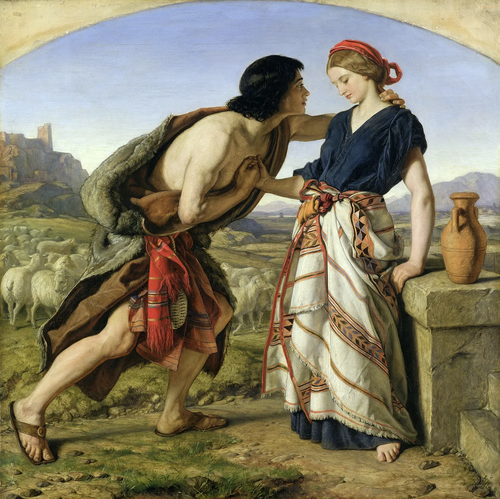
Arriving in Haran, Jacob spots a well—a sign of civilization—and shepherds watering their flocks. He inquires about his uncle Laban and learns that Laban’s daughter Rachel is approaching with her sheep.
> Genesis 29:1–12 (ESV): Then Jacob went on his journey and came to the land of the people of the east. As he looked, he saw a well in the field, and behold, three flocks of sheep lying beside it... Jacob said to them, “My brothers, where do you come from?” They said, “We are from Haran.” ... “Is it well with him?” They said, “It is well; and see, Rachel his daughter is coming with the sheep!”
If this were a movie, the camera would zoom in on Rachel—hair flowing, epic music swelling. Jacob, typically more homebody than hero (think HGTV enthusiast in beige), summons superhuman strength to roll the massive stone from the well and water her flock. He kisses her, weeps, and reveals he’s her cousin. Laban welcomes him warmly, and after a month, offers wages for his work.
Laban has two daughters: Older Leah with “weak eyes” (perhaps not fitting cultural beauty standards), and younger Rachel, “beautiful in form and appearance.” Beauty varies by culture—tan skin might be prized in one, scorned in another. Trust God with your appearance; you’re knit together for a purpose. Don’t obsess over norms.
Jacob loves Rachel and offers seven years of service for her hand. Laban agrees, and those years fly by in Jacob’s lovesick haze—dopamine, serotonin, norepinephrine clouding his judgment during negotiations.
Arriving in Haran, Jacob spots a well—a sign of civilization—and shepherds watering their flocks. He inquires about his uncle Laban and learns that Laban’s daughter Rachel is approaching with her sheep.
> Genesis 29:1–12 (ESV): Then Jacob went on his journey and came to the land of the people of the east. As he looked, he saw a well in the field, and behold, three flocks of sheep lying beside it... Jacob said to them, “My brothers, where do you come from?” They said, “We are from Haran.” ... “Is it well with him?” They said, “It is well; and see, Rachel his daughter is coming with the sheep!”
If this were a movie, the camera would zoom in on Rachel—hair flowing, epic music swelling. Jacob, typically more homebody than hero (think HGTV enthusiast in beige), summons superhuman strength to roll the massive stone from the well and water her flock. He kisses her, weeps, and reveals he’s her cousin. Laban welcomes him warmly, and after a month, offers wages for his work.
Laban has two daughters: Older Leah with “weak eyes” (perhaps not fitting cultural beauty standards), and younger Rachel, “beautiful in form and appearance.” Beauty varies by culture—tan skin might be prized in one, scorned in another. Trust God with your appearance; you’re knit together for a purpose. Don’t obsess over norms.
Jacob loves Rachel and offers seven years of service for her hand. Laban agrees, and those years fly by in Jacob’s lovesick haze—dopamine, serotonin, norepinephrine clouding his judgment during negotiations.
The Wedding Deception
The wedding feast lasts seven days, culminating in the marriage tent. Amid music, drink, and torchlight, Jacob consummates the marriage... only to wake up beside Leah.
> Genesis 29:25 (ESV): And in the morning, behold, it was Leah!
Furious, Jacob confronts Laban: “What have you done? I served for Rachel!” Laban replies, “We don’t give the younger before the firstborn”—a custom Jacob overlooked. Irony abounds: The deceiver is deceived, echoing his trickery of Isaac.
Laban proposes: Finish Leah’s bridal week, then marry Rachel for another seven years’ service. In a week, Jacob has two wives: Beautiful Rachel and ordinary Leah. He loves Rachel more, serving the additional years.
Scripture uses “love” and “hate” to denote preference: Isaac loved Esau, Rebekah loved Jacob; God loved Jacob but “hated” Esau (Malachi 1:2-3).
> Genesis 29:31 (ESV): When the Lord saw that Leah was hated, he opened her womb, but Rachel was barren.
In this culture, children were security and legacy. Barrenness was devastating. God sees Leah’s plight—not complicit in the deception, yet unloved—and blesses her with fertility.
> Genesis 29:25 (ESV): And in the morning, behold, it was Leah!
Furious, Jacob confronts Laban: “What have you done? I served for Rachel!” Laban replies, “We don’t give the younger before the firstborn”—a custom Jacob overlooked. Irony abounds: The deceiver is deceived, echoing his trickery of Isaac.
Laban proposes: Finish Leah’s bridal week, then marry Rachel for another seven years’ service. In a week, Jacob has two wives: Beautiful Rachel and ordinary Leah. He loves Rachel more, serving the additional years.
Scripture uses “love” and “hate” to denote preference: Isaac loved Esau, Rebekah loved Jacob; God loved Jacob but “hated” Esau (Malachi 1:2-3).
> Genesis 29:31 (ESV): When the Lord saw that Leah was hated, he opened her womb, but Rachel was barren.
In this culture, children were security and legacy. Barrenness was devastating. God sees Leah’s plight—not complicit in the deception, yet unloved—and blesses her with fertility.
Leah’s Sons and Shifting Focus
Leah bears Reuben (”seen by the Lord”), hoping Jacob will love her. No change.
She bears Simeon (”heard by the Lord”), hoping to be heard. Still unseen.
Levi (”attached”), hoping for connection. Yet, she remains invisible.
Have you been there? Efforts unrecognized, never “enough”? Jim Carrey once said, “I wish everyone could get rich and famous... so they could see that it’s not the answer.” In our affluent coastal Florida community, many live the American Dream yet battle depression. If you feel unseen in spite of your deliveries, your heart is fertile for a “Judah.”
> Genesis 29:35 (ESV): And she conceived again and bore a son, and said, “This time I will praise the Lord.” Therefore she called his name Judah.
Judah means “praise.” Leah shifts from seeking Jacob’s approval to praising Yahweh—not generic “Elohim,” but the covenant God of relationship. No longer naming her pain, she names her God.
God is drawn to the broken, not the “Rachels” of the world:
- Psalm 34:18: “The Lord is near to the brokenhearted...”
- Isaiah 57:15: “I dwell... with him who is of a contrite and lowly spirit.”
- Matthew 11:28: “Come to me, all who labor... for I am gentle and lowly in heart.”
Isaiah 42:3 prophesies of Jesus: “A bruised reed he will not break, and a faintly burning wick he will not quench.” Christ prefers the bruised and smoldering—He can use Rachel, but He’s really into Leah!
If life humbles you, congratulations—it’s sweet perfume to God. Romans 5:3-5 reminds us suffering produces endurance, character, and hope, poured out through the Holy Spirit.
She bears Simeon (”heard by the Lord”), hoping to be heard. Still unseen.
Levi (”attached”), hoping for connection. Yet, she remains invisible.
Have you been there? Efforts unrecognized, never “enough”? Jim Carrey once said, “I wish everyone could get rich and famous... so they could see that it’s not the answer.” In our affluent coastal Florida community, many live the American Dream yet battle depression. If you feel unseen in spite of your deliveries, your heart is fertile for a “Judah.”
> Genesis 29:35 (ESV): And she conceived again and bore a son, and said, “This time I will praise the Lord.” Therefore she called his name Judah.
Judah means “praise.” Leah shifts from seeking Jacob’s approval to praising Yahweh—not generic “Elohim,” but the covenant God of relationship. No longer naming her pain, she names her God.
God is drawn to the broken, not the “Rachels” of the world:
- Psalm 34:18: “The Lord is near to the brokenhearted...”
- Isaiah 57:15: “I dwell... with him who is of a contrite and lowly spirit.”
- Matthew 11:28: “Come to me, all who labor... for I am gentle and lowly in heart.”
Isaiah 42:3 prophesies of Jesus: “A bruised reed he will not break, and a faintly burning wick he will not quench.” Christ prefers the bruised and smoldering—He can use Rachel, but He’s really into Leah!
If life humbles you, congratulations—it’s sweet perfume to God. Romans 5:3-5 reminds us suffering produces endurance, character, and hope, poured out through the Holy Spirit.
A New Year’s Invitation to Praise
Praise amid difficulty breaks comparison’s cycle. Leah, once unwanted, becomes Jesus’ ancestor—the Lion of Judah. By turning to God, she’s woven into redemption’s story.
As 2026 unfolds, we are Leah, but loved like Rachel. Stop sideways glances: Do they see me? Affirm me? Look to God, who loves with everlasting love (Jeremiah 31:3). This year, name your God, not your pain. Let praise be your resolution—turn focus heavenward, and watch God shape your story into something amazing.
If this resonates, share your thoughts below. How will you embrace being “loved like Rachel” in 2026?
As 2026 unfolds, we are Leah, but loved like Rachel. Stop sideways glances: Do they see me? Affirm me? Look to God, who loves with everlasting love (Jeremiah 31:3). This year, name your God, not your pain. Let praise be your resolution—turn focus heavenward, and watch God shape your story into something amazing.
If this resonates, share your thoughts below. How will you embrace being “loved like Rachel” in 2026?
The Maximum Life Blog
My name is Zach Terry. The thoughts and opinions expressed in this blog are my own, with occasional interjections from my bride of nearly 25 years, Julie. This format of publication is meant to allow for engagement and interaction. Feel free to comment. But please, be nice.
Recent
Archive
2026
January
Cleansing the PalateThe Library of MankindSuch a Strange Way to Save the WorldLoved Like RachelCode Red | From the Army to Audiobooks — Faith, Literature, and the Making of a Voice ActorConverts and ConflictMaids and Mandrakes: Dysfunction, Departure, and Divine Grace in Genesis 30The Importance of Children's Theology BooksDealing with a Narcissist
2025
February
March
July
August
September
October
Why We Should Bless IsraelGovernment Shutdowns and God’s Blueprint for Smaller GovernmentCompassion and ConsequencesSodom, Netflix, and the Two Paths Before UsRevival Isn’t a Rumor — It’s HappeningIt’s Time to Stop Playing It SafeA New Door OpensPreach the Word. Show Your Hand.When “Love Your Neighbor” Becomes a WeaponA New Day DawningPaving the Way of Anti-ChristThe Church and the Honky-TonkMy Personal Position on Israel
November
2024
April
May
August
No Comments