When the Gospel Walks Into Athens
If there was ever a city where the gospel shouldn’t work, it was Athens.
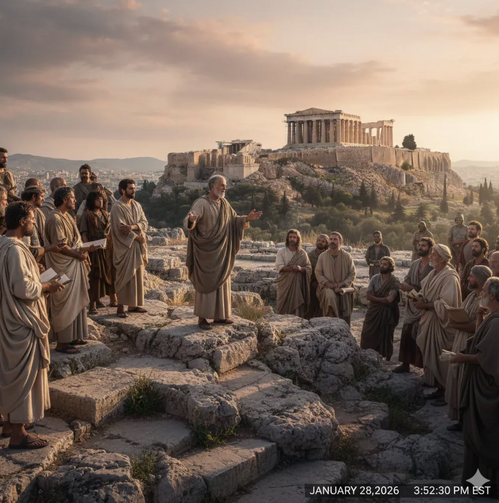
Athens was ancient even by first-century standards—over 4,000 years old in Paul’s day. It was named after the goddess Athena and had once been home to Socrates, Plato, Aristotle, and Alexander the Great. By the time Paul arrived, it had shrunk into something of a university town, but its intellectual influence still towered over the ancient world.
Athens was deeply polytheistic—there were gods for everything—and aggressively pluralistic—you worshiped your god, I’ll worship mine, and nobody gets to say who’s right. Statues filled the city. One ancient writer quipped that it was easier to find a god in Athens than a man.
And this is where Paul finds himself—alone.
“Now while Paul was waiting for them at Athens, his spirit was provoked within him as he saw that the city was full of idols.” (Acts 17:16, ESV)
Luke uses a striking word here. Paul wasn’t mildly irritated. His spirit was paroxyneto—sharply distressed, stirred, provoked. One theologian described it as a spiritual seizure. This was not cultural curiosity. This was holy anguish.
So what does Paul do when the gospel walks into Athens?
Athens was ancient even by first-century standards—over 4,000 years old in Paul’s day. It was named after the goddess Athena and had once been home to Socrates, Plato, Aristotle, and Alexander the Great. By the time Paul arrived, it had shrunk into something of a university town, but its intellectual influence still towered over the ancient world.
Athens was deeply polytheistic—there were gods for everything—and aggressively pluralistic—you worshiped your god, I’ll worship mine, and nobody gets to say who’s right. Statues filled the city. One ancient writer quipped that it was easier to find a god in Athens than a man.
And this is where Paul finds himself—alone.
“Now while Paul was waiting for them at Athens, his spirit was provoked within him as he saw that the city was full of idols.” (Acts 17:16, ESV)
Luke uses a striking word here. Paul wasn’t mildly irritated. His spirit was paroxyneto—sharply distressed, stirred, provoked. One theologian described it as a spiritual seizure. This was not cultural curiosity. This was holy anguish.
So what does Paul do when the gospel walks into Athens?
The People Paul Engaged
Luke tells us Paul reasoned daily with three distinct groups:
Athens was not irreligious. It was over-religious. And that matters.
Among them were Epicureans—who believed the gods were distant and life’s goal was pleasure—and Stoics, who believed virtue meant suppressing emotion and accepting fate without complaint.
When Paul preached Jesus and the resurrection, some scoffed. Others were intrigued. And eventually, Paul was brought to the Areopagus, the intellectual and legal nerve center of the city—the place where Socrates had once been condemned.
This is where Paul delivers one of the most masterful evangelistic sermons in Scripture.
- The Jews – Those raised on the Law and the Psalms. They had Scripture but needed to see Christ.
- The Devout Persons – God-fearers who respected Jewish belief but had stopped short of full commitment.
- Those in the Marketplace – The spiritually curious, philosophically eclectic crowd.
Athens was not irreligious. It was over-religious. And that matters.
Among them were Epicureans—who believed the gods were distant and life’s goal was pleasure—and Stoics, who believed virtue meant suppressing emotion and accepting fate without complaint.
When Paul preached Jesus and the resurrection, some scoffed. Others were intrigued. And eventually, Paul was brought to the Areopagus, the intellectual and legal nerve center of the city—the place where Socrates had once been condemned.
This is where Paul delivers one of the most masterful evangelistic sermons in Scripture.
Three Principles for Reaching a Different Worldview
1. Have Competent Conversations
Paul does something remarkable: he does not begin with Scripture.
Not because Scripture lacks authority—but because his audience had no category for it.
Instead, Paul demonstrates cultural fluency. He quotes:
Paul knew their literature. Their poetry. Their assumptions.
This was not compromise—it was strategy.
If we want to reach people across cultures, we must know how they think without being seduced by what they think. Billy Graham’s team famously studied the culture of a city for weeks before a crusade—not to imitate it, but to engage it intelligently.
Christians often default to extremes:
Paul models a third way: gospel engagement.
In the world, but not of it.
2. Recognize Cultural Contradictions
As Paul walked the city, he noticed something fascinating:
Athens had gods for everything—Poseidon for the sea, Hermes for speech, Ares for war. But just in case they had missed one, they built an altar to an unknown god.
Paul seizes the contradiction.
“You admit you don’t know everything. Let me tell you what you’re missing.”
Paul dismantles their worldview logically:
Then Paul presses the implication:
Here’s the point: every worldview must answer four questions—
Worldviews collapse under their own contradictions.
Atheistic evolution may explain origins—but it cannot justify meaning, morality, or hope. And yet moral outrage persists. Why? Because the law of God is written on the heart.
Islam addresses origin and destiny—but its moral system collapses under injustice.
Paul understood this because he had a biblical worldview, and only a Christian who knows truth well can spot falsehood clearly.
3. Hold the Gospel in Constant Comparison
Then Paul turns.
“The times of ignorance God overlooked, but now he commands all people everywhere to repent.” (Acts 17:30, ESV)
In the intellectual capital of the ancient world, Paul declares their greatest problem is ignorance.
Not ignorance of facts—but ignorance of God.
He centers everything on one man:
That’s the line that splits the room.
Some mocked.
Some wanted to hear more.
Some believed.
Among the converts was Dionysius, a member of the Areopagus itself—who would later become the first pastor of the church in Athens.
Today, the Acropolis is no longer the highest point in Athens. A church now stands above it. The gospel outlasted the idols.
Paul does something remarkable: he does not begin with Scripture.
Not because Scripture lacks authority—but because his audience had no category for it.
Instead, Paul demonstrates cultural fluency. He quotes:
- Aeschylus, from The Eumenides, using a rare Greek term to describe their religiosity
- Epimenides, a Cretan poet, acknowledging humanity’s instinct to seek God
- A Stoic philosopher, affirming that we are God’s offspring
Paul knew their literature. Their poetry. Their assumptions.
This was not compromise—it was strategy.
If we want to reach people across cultures, we must know how they think without being seduced by what they think. Billy Graham’s team famously studied the culture of a city for weeks before a crusade—not to imitate it, but to engage it intelligently.
Christians often default to extremes:
- Withdrawal – Retreating into isolation and hoping the rapture comes soon
- Accommodation – Blending in so thoroughly that we lose any prophetic voice
Paul models a third way: gospel engagement.
In the world, but not of it.
2. Recognize Cultural Contradictions
As Paul walked the city, he noticed something fascinating:
“I found also an altar with this inscription, ‘To the unknown god.’” (Acts 17:23, ESV)
Athens had gods for everything—Poseidon for the sea, Hermes for speech, Ares for war. But just in case they had missed one, they built an altar to an unknown god.
Paul seizes the contradiction.
“You admit you don’t know everything. Let me tell you what you’re missing.”
Paul dismantles their worldview logically:
- God is Creator, not confined to temples
- God is self-sufficient, not dependent on human hands
- God created all nations from one man, demolishing ethnic superiority
Then Paul presses the implication:
“Being then God’s offspring, we ought not to think that the divine being is like gold or silver or stone.” (Acts 17:29, ESV)
Here’s the point: every worldview must answer four questions—
- Origin – Where did we come from?
- Meaning – Why are we here?
- Morality – How should we live?
- Destiny – What happens when we die?
Worldviews collapse under their own contradictions.
Atheistic evolution may explain origins—but it cannot justify meaning, morality, or hope. And yet moral outrage persists. Why? Because the law of God is written on the heart.
Islam addresses origin and destiny—but its moral system collapses under injustice.
Paul understood this because he had a biblical worldview, and only a Christian who knows truth well can spot falsehood clearly.
3. Hold the Gospel in Constant Comparison
Then Paul turns.
“The times of ignorance God overlooked, but now he commands all people everywhere to repent.” (Acts 17:30, ESV)
In the intellectual capital of the ancient world, Paul declares their greatest problem is ignorance.
Not ignorance of facts—but ignorance of God.
He centers everything on one man:
“He has fixed a day on which he will judge the world in righteousness by a man whom he has appointed… by raising him from the dead.” (Acts 17:31, ESV)
That’s the line that splits the room.
Some mocked.
Some wanted to hear more.
Some believed.
Among the converts was Dionysius, a member of the Areopagus itself—who would later become the first pastor of the church in Athens.
Today, the Acropolis is no longer the highest point in Athens. A church now stands above it. The gospel outlasted the idols.
Final Word
Paul never softened the gospel to fit Athens.
He studied their culture.
He spoke their language.
He exposed their contradictions.
But when the moment came, he did not hesitate.
He brought every worldview—every idol, every philosophy—face to face with the risen Christ.
Because the greatest problem of any culture is not ignorance of information, but ignorance of God.
And the solution is still the same:
Jesus Christ—crucified, risen, and reigning.
He studied their culture.
He spoke their language.
He exposed their contradictions.
But when the moment came, he did not hesitate.
He brought every worldview—every idol, every philosophy—face to face with the risen Christ.
Because the greatest problem of any culture is not ignorance of information, but ignorance of God.
And the solution is still the same:
Jesus Christ—crucified, risen, and reigning.
The Maximum Life Blog
My name is Zach Terry. The thoughts and opinions expressed in this blog are my own, with occasional interjections from my bride of nearly 25 years, Julie. This format of publication is meant to allow for engagement and interaction. Feel free to comment. But please, be nice.
Recent
Archive
2026
January
Cleansing the PalateThe Library of MankindSuch a Strange Way to Save the WorldLoved Like RachelCode Red | From the Army to Audiobooks — Faith, Literature, and the Making of a Voice ActorConverts and ConflictMaids and Mandrakes: Dysfunction, Departure, and Divine Grace in Genesis 30The Importance of Children's Theology BooksDealing with a Narcissist
2025
February
March
July
August
September
October
Why We Should Bless IsraelGovernment Shutdowns and God’s Blueprint for Smaller GovernmentCompassion and ConsequencesSodom, Netflix, and the Two Paths Before UsRevival Isn’t a Rumor — It’s HappeningIt’s Time to Stop Playing It SafeA New Door OpensPreach the Word. Show Your Hand.When “Love Your Neighbor” Becomes a WeaponA New Day DawningPaving the Way of Anti-ChristThe Church and the Honky-TonkMy Personal Position on Israel
November
2024
April
May
No Comments