Shaping Identity
Lessons from Jacob’s Ladder in Genesis 28
Imagine you’re at a lively party, and the host hands you a name tag that says, “Hello, I am...” followed by a blank space. But here’s the twist: instead of scribbling your actual name, you’re instructed to write something that truly describes or identifies you. It’s a game to break the ice and help everyone get to know each other on a deeper level. What would you put down? One word, one phrase—what’s the essence of who you are?
Most folks might jot down their job: “I am an entrepreneur,” “I am a doctor,” or “I am a teacher.” Others could lean into politics: “I am a Republican” or “I am a Democrat.” Some might go with their worldview: “I am a conservative” or “I am a liberal.” Then there are those who define themselves by where they’re from, a tragedy they’ve endured (”I am a widow,” “I am homeless”), their struggles (”I am an alcoholic,” “I am an addict”), or their achievements (”I am a college graduate,” “I am an athlete”). And sadly, some carry labels imposed by others—words spoken early and often that stick like glue.
At the heart of it all is your core identity, that central hub from which everything else in your life radiates, like spokes on a wheel. As Proverbs 23:7 puts it, “As a man thinks within his heart, so is he.” Motivational speaker Zig Ziglar echoed this:
“It is impossible to perform consistently in a way that is inconsistent with how you see yourself.”
Your identity isn’t just one thing about you—it’s the truest thing. Other labels might describe aspects of your life, but they flow from that core.
One of the Bible’s grand themes is that God wants your ultimate identity rooted in who you are in Christ, with everything else branching out from there. Everything flows from our core identity, after all.
Jacob’s Messed-Up Identity: A Case Study
If anyone embodied a fractured sense of self, it was Jacob from the Book of Genesis. His very name meant “deceiver” or “liar”—imagine being cradled by your mother as she coos, “Oh, there’s my little liar.” Names in ancient cultures carried weight, and this one shaped him deeply. As the second-born twin, he was culturally destined to serve his older brother Esau, the rightful patriarch. This fueled his schemes: manipulating Esau out of his birthright and even dressing up as him to steal their father’s blessing. Jacob was a grown man pretending to be someone else just to feel valued—talk about identity crisis.
But God wasn’t done with Jacob. In the chapters ahead, we see divine intervention reshaping his self-view. God knew Jacob couldn’t live consistently if his identity remained warped. We pick up the story in Genesis 28:10–17, where Jacob is on the run from Esau’s murderous rage, heading to Haran to lay low with Uncle Laban.
The Turning Point: A Dream in the Wilderness
Jacob left Beersheba and went toward Haran. He came to a certain place and stayed there that night because the sun had set. Taking one of the stones of the place, he put it under his head and lay down to sleep.
The Bible is usually precise about locations, but here it’s vague: “a certain place.” It had no name yet—that would change. Alone in the middle of nowhere, Jacob uses a rock for a pillow. Why? Because he had nothing else—no cloak, no backpack. He was homeless, broke, stripped of family, friends, and security.
This sets the stage for God’s three-step process to reshape identity:
1. The Removal of Faulty Foundations
God often starts by stripping away our crutches—those things we lean on instead of Him. For Jacob, everything familiar was gone: no doting mother, no blessing father. Biblical examples abound:
As Chuck Swindoll notes, God removes crutches for three reasons:
Isaiah marked his greatest vision with, “In the year King Uzziah died, I saw the Lord.” Sometimes, loss clears the way to see God clearly.
2. The Revelation of Divine Access
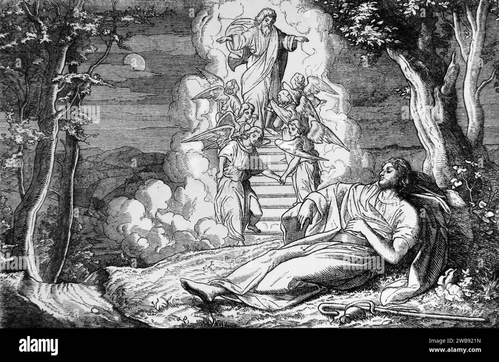
In his dream, Jacob sees a ladder (or stairway, like a ziggurat) reaching from earth to heaven, with angels ascending and descending.
Dreams aren’t always from God—Ecclesiastes 5:3 says they often come from “many cares.” But this one was revelatory. If God’s speaking, you’ll know—no divine speech impediments.
Jesus references this in John 1:45–51, calling Nathanael “an Israelite indeed, in whom there is no deceit” (no Jacob-like trickery). He promises greater things: “You will see heaven opened, and the angels of God ascending and descending on the Son of Man.” Jesus declares Himself the ladder—the direct access to God.
Here, separated from all he held dear, Jacob encounters the divine.
Most folks might jot down their job: “I am an entrepreneur,” “I am a doctor,” or “I am a teacher.” Others could lean into politics: “I am a Republican” or “I am a Democrat.” Some might go with their worldview: “I am a conservative” or “I am a liberal.” Then there are those who define themselves by where they’re from, a tragedy they’ve endured (”I am a widow,” “I am homeless”), their struggles (”I am an alcoholic,” “I am an addict”), or their achievements (”I am a college graduate,” “I am an athlete”). And sadly, some carry labels imposed by others—words spoken early and often that stick like glue.
At the heart of it all is your core identity, that central hub from which everything else in your life radiates, like spokes on a wheel. As Proverbs 23:7 puts it, “As a man thinks within his heart, so is he.” Motivational speaker Zig Ziglar echoed this:
“It is impossible to perform consistently in a way that is inconsistent with how you see yourself.”
Your identity isn’t just one thing about you—it’s the truest thing. Other labels might describe aspects of your life, but they flow from that core.
One of the Bible’s grand themes is that God wants your ultimate identity rooted in who you are in Christ, with everything else branching out from there. Everything flows from our core identity, after all.
Jacob’s Messed-Up Identity: A Case Study
If anyone embodied a fractured sense of self, it was Jacob from the Book of Genesis. His very name meant “deceiver” or “liar”—imagine being cradled by your mother as she coos, “Oh, there’s my little liar.” Names in ancient cultures carried weight, and this one shaped him deeply. As the second-born twin, he was culturally destined to serve his older brother Esau, the rightful patriarch. This fueled his schemes: manipulating Esau out of his birthright and even dressing up as him to steal their father’s blessing. Jacob was a grown man pretending to be someone else just to feel valued—talk about identity crisis.
But God wasn’t done with Jacob. In the chapters ahead, we see divine intervention reshaping his self-view. God knew Jacob couldn’t live consistently if his identity remained warped. We pick up the story in Genesis 28:10–17, where Jacob is on the run from Esau’s murderous rage, heading to Haran to lay low with Uncle Laban.
The Turning Point: A Dream in the Wilderness
Jacob left Beersheba and went toward Haran. He came to a certain place and stayed there that night because the sun had set. Taking one of the stones of the place, he put it under his head and lay down to sleep.
The Bible is usually precise about locations, but here it’s vague: “a certain place.” It had no name yet—that would change. Alone in the middle of nowhere, Jacob uses a rock for a pillow. Why? Because he had nothing else—no cloak, no backpack. He was homeless, broke, stripped of family, friends, and security.
This sets the stage for God’s three-step process to reshape identity:
1. The Removal of Faulty Foundations
God often starts by stripping away our crutches—those things we lean on instead of Him. For Jacob, everything familiar was gone: no doting mother, no blessing father. Biblical examples abound:
- Joseph learned this in the pit and prison.
- Moses on the backside of Midian.
- Elijah fleeing Queen Jezebel.
- Even Jesus was tested in the desert after 40 days of fasting.
- Job’s deepest encounters with God came after losing everything.
As Chuck Swindoll notes, God removes crutches for three reasons:
- They become substitutes for Him—turning to people or abilities before God.
- They offer only temporary relief, leading to frustration as we hop from one to another.
- They keep our focus horizontal, like Peter sinking in the waves when he looked away from Jesus.
Isaiah marked his greatest vision with, “In the year King Uzziah died, I saw the Lord.” Sometimes, loss clears the way to see God clearly.
2. The Revelation of Divine Access
In his dream, Jacob sees a ladder (or stairway, like a ziggurat) reaching from earth to heaven, with angels ascending and descending.
Dreams aren’t always from God—Ecclesiastes 5:3 says they often come from “many cares.” But this one was revelatory. If God’s speaking, you’ll know—no divine speech impediments.
Jesus references this in John 1:45–51, calling Nathanael “an Israelite indeed, in whom there is no deceit” (no Jacob-like trickery). He promises greater things: “You will see heaven opened, and the angels of God ascending and descending on the Son of Man.” Jesus declares Himself the ladder—the direct access to God.
Here, separated from all he held dear, Jacob encounters the divine.
3. Reorientation to God’s Promise
The Lord stands above the ladder: “I am the Lord, the God of Abraham your father and the God of Isaac.” He doesn’t call Jacob by name yet—faith had been his ancestors’, but now it’s personal. God promises land, countless offspring, blessings for all families, and His presence: “I am with you... I will not leave you.”
Jacob awakes in awe: “Surely the Lord is in this place, and I did not know it... This is the house of God, and this is the gate of heaven.”
God shifts from “the God of Abraham and Isaac” to “the God of Abraham, Isaac, and Jacob.” Identity isn’t forged—it’s received through encounters with Him.
Think of Rocky admitting he can’t beat Apollo but wants to “go the distance” to prove he’s not a bum. Or Paul post-Damascus Road: no atheist could shake him because he’d seen the Lord, transforming from persecutor to evangelist.
At chapter’s end, Jacob sets up his stone pillow as an altar, vowing a tithe if God keeps His word. The deceiver becomes a giver, the schemer a worshiper.
Jesus does the same with Peter in Matthew 16:13–18. Asking, “Who do you say I am?” Peter declares, “You are the Christ, the Son of the living God.” Jesus responds: “You are Peter, and on this rock I will build my church.” Focusing on Christ’s identity reveals our own.
As 2 Corinthians 3:18 says, “We all, with unveiled face, beholding the glory of the Lord, are being transformed into the same image from one degree of glory to another.”
Who Names You? Three Options
When it comes to your ultimate identity—the truest thing about you—you have three paths:
Focus on Him... and find yourself in the process.
What about you? Who do you say He is? Your answer might just redefine everything. If this resonates, share your thoughts in the comments—let’s discuss how identity shapes our lives.
The Lord stands above the ladder: “I am the Lord, the God of Abraham your father and the God of Isaac.” He doesn’t call Jacob by name yet—faith had been his ancestors’, but now it’s personal. God promises land, countless offspring, blessings for all families, and His presence: “I am with you... I will not leave you.”
Jacob awakes in awe: “Surely the Lord is in this place, and I did not know it... This is the house of God, and this is the gate of heaven.”
God shifts from “the God of Abraham and Isaac” to “the God of Abraham, Isaac, and Jacob.” Identity isn’t forged—it’s received through encounters with Him.
Think of Rocky admitting he can’t beat Apollo but wants to “go the distance” to prove he’s not a bum. Or Paul post-Damascus Road: no atheist could shake him because he’d seen the Lord, transforming from persecutor to evangelist.
At chapter’s end, Jacob sets up his stone pillow as an altar, vowing a tithe if God keeps His word. The deceiver becomes a giver, the schemer a worshiper.
Jesus does the same with Peter in Matthew 16:13–18. Asking, “Who do you say I am?” Peter declares, “You are the Christ, the Son of the living God.” Jesus responds: “You are Peter, and on this rock I will build my church.” Focusing on Christ’s identity reveals our own.
As 2 Corinthians 3:18 says, “We all, with unveiled face, beholding the glory of the Lord, are being transformed into the same image from one degree of glory to another.”
Who Names You? Three Options
When it comes to your ultimate identity—the truest thing about you—you have three paths:
- Look Outside: Culture Names You. It’s subtle but pervasive. Students, ever been asked, “What sport do you play?” They’re sizing you up, labeling you.
- Look Inside: Name Yourself. The modern mantra: “I’m trying to find myself.” It’s a search for self-defined identity.
- Look Up: Christ Names You. Christianity says focus on Him. As you discover His identity, you uncover the truest you.
Focus on Him... and find yourself in the process.
What about you? Who do you say He is? Your answer might just redefine everything. If this resonates, share your thoughts in the comments—let’s discuss how identity shapes our lives.
The Maximum Life Blog
My name is Zach Terry. The thoughts and opinions expressed in this blog are my own, with occasional interjections from my bride of nearly 25 years, Julie. This format of publication is meant to allow for engagement and interaction. Feel free to comment. But please, be nice.
Recent
Archive
2026
January
Cleansing the PalateThe Library of MankindSuch a Strange Way to Save the WorldLoved Like RachelCode Red | From the Army to Audiobooks — Faith, Literature, and the Making of a Voice ActorConverts and ConflictMaids and Mandrakes: Dysfunction, Departure, and Divine Grace in Genesis 30The Importance of Children's Theology BooksDealing with a Narcissist
2025
February
March
July
August
September
October
Why We Should Bless IsraelGovernment Shutdowns and God’s Blueprint for Smaller GovernmentCompassion and ConsequencesSodom, Netflix, and the Two Paths Before UsRevival Isn’t a Rumor — It’s HappeningIt’s Time to Stop Playing It SafeA New Door OpensPreach the Word. Show Your Hand.When “Love Your Neighbor” Becomes a WeaponA New Day DawningPaving the Way of Anti-ChristThe Church and the Honky-TonkMy Personal Position on Israel
November
2024
April
May
August
No Comments