Paul's Preparation for Ministry
How a Zealous Persecutor Became Christianity’s Boldest Defender, and Lessons for Your Faith Journey Today
Nearly every single week, I sit down with someone who says, “I like what Jesus said, but I can’t handle Paul.” It’s a common refrain. Paul’s clear teachings on sexuality, morality, and the implications of Jesus’ work rub many people the wrong way in our modern world. But here’s the thing: dismissing Paul means redefining Jesus Himself. Paul wasn’t just an add-on to Christianity; he provided commentary, applications, and deep dives into what Jesus’ life, death, and resurrection truly meant. As long as we see Paul as a faithful messenger on par with the Old Testament prophets, the message of Christianity remains crystal clear.
This isn’t a new attack. Paul’s ministry has been under fire since the beginning. Yet his story—especially the early days after his dramatic conversion—reveals a man with no motive to fake anything. He was at the top of his game in Judaism: trained by the eminent Rabbi Gamaliel, surpassing his peers, and even leading the charge against Christians. Life was good for him. To admit defeat, to confess that his entire ideology was wrong? That was the most humiliating decision he could make. But Paul did it, and his transformation gives us profound lessons for our own faith journeys today.
In this post, we’ll dive into Galatians 1 and Acts 9 to unpack Paul’s early days. We’ll see how he became active in his new faith, became associated with the early church, and came to know God in a season of obscurity. Along the way, we’ll outline practical applications—such as why you should share your faith right away, plug into a community, and embrace solitude. His story defends his apostleship and offers timeless wisdom for us.
Why Paul Had Every Reason to Hate Christianity
Let’s start with Paul’s background. Before his conversion, he was Saul of Tarsus—a rising star in Judaism. As he writes in Galatians 1:13-14, “For you have heard of my former manner of life in Judaism, how I used to persecute the church of God beyond measure and tried to destroy it; and I was advancing in Judaism beyond many of my contemporaries among my countrymen, being more extremely zealous for my ancestral traditions.” He had no inherent motivation to entertain Christianity. In fact, switching sides was a massive downgrade: from respected Pharisee to persecuted outcast.
The early critics didn’t accuse him of making up stories about Jesus. Instead, their main charge was that his Gospel was second-hand, borrowed from the “real” apostles. Paul pushes back hard in Galatians 1:11-12: “For I would have you know, brethren, that the gospel which was preached by me is not according to man. For I neither received it from man, nor was I taught it, but I received it through a revelation of Jesus Christ.” He’s saying, “This came directly from Jesus—not from Peter or James.”
And in verses 15-16: “But when God, who had set me apart even from my mother’s womb and called me through His grace, was pleased to reveal His Son in me so that I might preach Him among the Gentiles.” Paul was saved and called into ministry at the same time. But did he rush to Jerusalem for apostolic approval? No. He went to Arabia first, then back to Damascus, and only three years later visited Jerusalem briefly to meet Cephas (Peter) and James. He swears he’s not lying about this independence.
This sets the stage: Paul’s Gospel was original, divinely revealed. But how did a latecomer like him grasp it so clearly?
Paul Entered Late, But Grasped It Clearly – Why?
The Gospel didn’t start with Paul. In 1 Corinthians 15:7-9, he admits: “Then He appeared to James, then to all the apostles; and last of all, as to one untimely born, He appeared to me also. For I am the least of the apostles, and not fit to be called an apostle, because I persecuted the church of God.” Paul came into the kingdom late and was different from the others.
So why did he understand the Gospel’s depths? How did he learn it in Damascus? How did he rise to prominence? The only explanation is something extraordinary: his personal encounter with the risen Christ on the road to Damascus. We covered that in detail in the last Pauline post, but what happened next adds even more credence.
This isn’t a new attack. Paul’s ministry has been under fire since the beginning. Yet his story—especially the early days after his dramatic conversion—reveals a man with no motive to fake anything. He was at the top of his game in Judaism: trained by the eminent Rabbi Gamaliel, surpassing his peers, and even leading the charge against Christians. Life was good for him. To admit defeat, to confess that his entire ideology was wrong? That was the most humiliating decision he could make. But Paul did it, and his transformation gives us profound lessons for our own faith journeys today.
In this post, we’ll dive into Galatians 1 and Acts 9 to unpack Paul’s early days. We’ll see how he became active in his new faith, became associated with the early church, and came to know God in a season of obscurity. Along the way, we’ll outline practical applications—such as why you should share your faith right away, plug into a community, and embrace solitude. His story defends his apostleship and offers timeless wisdom for us.
Why Paul Had Every Reason to Hate Christianity
Let’s start with Paul’s background. Before his conversion, he was Saul of Tarsus—a rising star in Judaism. As he writes in Galatians 1:13-14, “For you have heard of my former manner of life in Judaism, how I used to persecute the church of God beyond measure and tried to destroy it; and I was advancing in Judaism beyond many of my contemporaries among my countrymen, being more extremely zealous for my ancestral traditions.” He had no inherent motivation to entertain Christianity. In fact, switching sides was a massive downgrade: from respected Pharisee to persecuted outcast.
The early critics didn’t accuse him of making up stories about Jesus. Instead, their main charge was that his Gospel was second-hand, borrowed from the “real” apostles. Paul pushes back hard in Galatians 1:11-12: “For I would have you know, brethren, that the gospel which was preached by me is not according to man. For I neither received it from man, nor was I taught it, but I received it through a revelation of Jesus Christ.” He’s saying, “This came directly from Jesus—not from Peter or James.”
And in verses 15-16: “But when God, who had set me apart even from my mother’s womb and called me through His grace, was pleased to reveal His Son in me so that I might preach Him among the Gentiles.” Paul was saved and called into ministry at the same time. But did he rush to Jerusalem for apostolic approval? No. He went to Arabia first, then back to Damascus, and only three years later visited Jerusalem briefly to meet Cephas (Peter) and James. He swears he’s not lying about this independence.
This sets the stage: Paul’s Gospel was original, divinely revealed. But how did a latecomer like him grasp it so clearly?
Paul Entered Late, But Grasped It Clearly – Why?
The Gospel didn’t start with Paul. In 1 Corinthians 15:7-9, he admits: “Then He appeared to James, then to all the apostles; and last of all, as to one untimely born, He appeared to me also. For I am the least of the apostles, and not fit to be called an apostle, because I persecuted the church of God.” Paul came into the kingdom late and was different from the others.
So why did he understand the Gospel’s depths? How did he learn it in Damascus? How did he rise to prominence? The only explanation is something extraordinary: his personal encounter with the risen Christ on the road to Damascus. We covered that in detail in the last Pauline post, but what happened next adds even more credence.
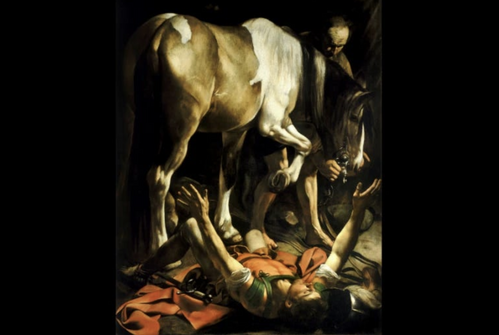
Imagine the scene: Blinded by a heavenly light, Saul hears Jesus’ voice and is forever changed. This wasn’t a hallucination—it propelled him into immediate action.
No Waiting Around: Paul’s Bold Start in Damascus
After his conversion, Saul didn’t sit idle. Acts 9:19-20 tells us he stayed in Damascus for several days, fellowshipping with the disciples, and “immediately he began to proclaim Jesus in the synagogues, saying, ‘He is the Son of God.’” This title—“Son of God”—was explosive. It echoed Jesus’ own claims in John 10:30-36, where He said, “the Father and I are one,” prompting blasphemy charges from the Jews.
Paul, who once hated this doctrine, now preached it passionately. The people were stunned: “Is this not he who in Jerusalem destroyed those who called on this name?” (Acts 9:21). He grew stronger, “confounding the Jews who lived at Damascus by proving that this Jesus is the Christ” (v. 22). “Proving” here means lining up Old Testament prophecies with Jesus’ life—logical, scriptural apologetics, much like he’d do later in Acts 17:2-3.
No Waiting Around: Paul’s Bold Start in Damascus
After his conversion, Saul didn’t sit idle. Acts 9:19-20 tells us he stayed in Damascus for several days, fellowshipping with the disciples, and “immediately he began to proclaim Jesus in the synagogues, saying, ‘He is the Son of God.’” This title—“Son of God”—was explosive. It echoed Jesus’ own claims in John 10:30-36, where He said, “the Father and I are one,” prompting blasphemy charges from the Jews.
Paul, who once hated this doctrine, now preached it passionately. The people were stunned: “Is this not he who in Jerusalem destroyed those who called on this name?” (Acts 9:21). He grew stronger, “confounding the Jews who lived at Damascus by proving that this Jesus is the Christ” (v. 22). “Proving” here means lining up Old Testament prophecies with Jesus’ life—logical, scriptural apologetics, much like he’d do later in Acts 17:2-3.
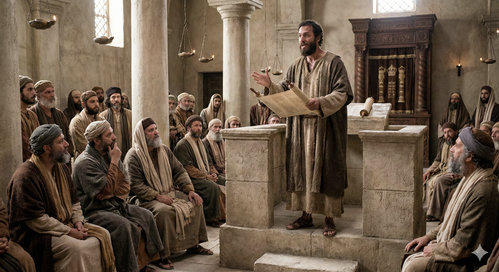
From there, Paul journeyed to Arabia for about 18 months (Galatians 1:17), likely learning from the Lord and preaching. He stirred up trouble, as 2 Corinthians 11:32-33 hints at the king’s ethnarch guarding Damascus to seize him. Back in the city, the Jews plotted his death, but his disciples lowered him in a basket through the wall at night (Acts 9:23-25). Already, he had “his disciples”—his ministry was bearing fruit!
Paul got active right away. And you should too. Were you saved last week? Whom have you told about Christ this week? You don’t need fancy training—just share what you know. It takes the same measure of understanding to trust Christ as it does to share Him.
From Outsider to Insider: Barnabas’s Role in Paul’s Acceptance
Next, Paul headed to Jerusalem, trying to join the disciples. But they were terrified: “They were all afraid of him, not believing that he was a disciple” (Acts 9:26). Imagine the courage it took for Paul to face the widows and orphans of those he’d persecuted. Why go? Jerusalem was the mother church, ground zero for the Gospel. He needed their blessing to preach.
Enter Barnabas, the “son of encouragement.” He took Paul to the apostles, vouching for his vision on the road and his boldness in Damascus (v. 27). Soon, Paul was moving freely, speaking out boldly (v. 28).
Paul got active right away. And you should too. Were you saved last week? Whom have you told about Christ this week? You don’t need fancy training—just share what you know. It takes the same measure of understanding to trust Christ as it does to share Him.
From Outsider to Insider: Barnabas’s Role in Paul’s Acceptance
Next, Paul headed to Jerusalem, trying to join the disciples. But they were terrified: “They were all afraid of him, not believing that he was a disciple” (Acts 9:26). Imagine the courage it took for Paul to face the widows and orphans of those he’d persecuted. Why go? Jerusalem was the mother church, ground zero for the Gospel. He needed their blessing to preach.
Enter Barnabas, the “son of encouragement.” He took Paul to the apostles, vouching for his vision on the road and his boldness in Damascus (v. 27). Soon, Paul was moving freely, speaking out boldly (v. 28).
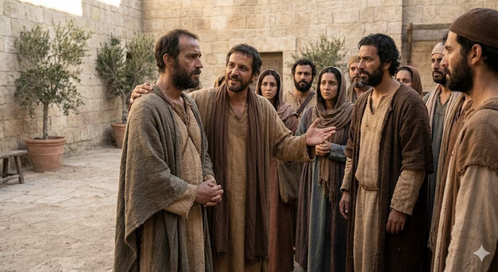
I pray you meet a Barnabas soon after coming to faith—someone fresh and encouraging, not jaded. Think of new Christians: One girl walked into church, saw lyrics on the screen, and said, “Cool karaoke!” Another, Ray, asked about an Easter song called “Were You There?” and replied, “No, dude, of course I wasn’t there—how was it?” They’re joyful, clueless, and love Jesus. But without a Barnabas, they might grow miserable like some veterans. Barnabas saw potential in Paul and supported him.
Plugging in is crucial. God makes us complete in Christ yet interdependent in the body. A local church needs you, and you need it. It’s more important than football, hunting, or work. It’s Jesus’ idea—worthy of your commitment, investment, and service. What if your hand skipped work or your foot went hunting? The body suffers. Report for duty!
Ten Years in Obscurity: Paul’s ‘Wilderness University’
But Paul’s boldness led to more plots. He argued with Hellenistic Jews, who tried to kill him, so the brethren sent him to Caesarea and then Tarsus (Acts 9:29-30). The next 10 years? Unrecorded. From age 36 to 46, Paul was in obscurity in his hometown.
He needed “Wilderness University” to develop. You enter the wilderness at God’s direction, experience it by His design, and exit ready for His destiny. Faith grows in the dark, like film in a darkroom. As Steve Wagners says, light that would damage undeveloped film later brings out its beauty. Dr. H.B. Smith adds: “Faith is like film: IT ONLY DEVELOPS IN THE DARK!”
During this time: His conversion story spread (Galatians 1:21-24). Shipwrecks happened. He suffered losses (Philippians 3:8)—maybe disowned by family or lost a wife. Five times he received 39 lashes (2 Corinthians 11:24), synagogue discipline. He had a vision of heaven (2 Corinthians 12:1-4) and received his “thorn in the flesh” (v. 7) to keep him humble.
Plugging in is crucial. God makes us complete in Christ yet interdependent in the body. A local church needs you, and you need it. It’s more important than football, hunting, or work. It’s Jesus’ idea—worthy of your commitment, investment, and service. What if your hand skipped work or your foot went hunting? The body suffers. Report for duty!
Ten Years in Obscurity: Paul’s ‘Wilderness University’
But Paul’s boldness led to more plots. He argued with Hellenistic Jews, who tried to kill him, so the brethren sent him to Caesarea and then Tarsus (Acts 9:29-30). The next 10 years? Unrecorded. From age 36 to 46, Paul was in obscurity in his hometown.
He needed “Wilderness University” to develop. You enter the wilderness at God’s direction, experience it by His design, and exit ready for His destiny. Faith grows in the dark, like film in a darkroom. As Steve Wagners says, light that would damage undeveloped film later brings out its beauty. Dr. H.B. Smith adds: “Faith is like film: IT ONLY DEVELOPS IN THE DARK!”
During this time: His conversion story spread (Galatians 1:21-24). Shipwrecks happened. He suffered losses (Philippians 3:8)—maybe disowned by family or lost a wife. Five times he received 39 lashes (2 Corinthians 11:24), synagogue discipline. He had a vision of heaven (2 Corinthians 12:1-4) and received his “thorn in the flesh” (v. 7) to keep him humble.
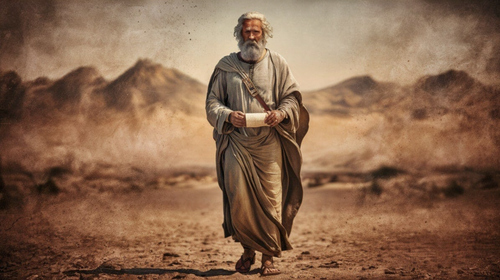
answeredfaith.com
The Transformative Journey of Paul: Trials, Teachings, and Impact
It wasn’t until 46 that Paul planted churches or did recorded ministry. Why? He got three things right: active, associated, and alone.
Do you get along with God? Solitude is key to Christian life. Find a place, read a few verses, pray, and reflect throughout the day. It’ll revolutionize you.
Paul’s Three Keys and a Call to Action
Paul was a true apostle—his words are God’s Word. He succeeded by getting active (share immediately), associated (plug in), and alone (develop in obscurity). In a world questioning biblical authority, his story defends the faith.
Apply it: Tell someone about Christ this week. Join a church community. Carve out solitude. Try it—find time alone with your Bible today. If this resonated, share the post and subscribe for more biblical insights.
When you read Paul, you’re reading divine truth. Let it transform you as it did him.
The Transformative Journey of Paul: Trials, Teachings, and Impact
It wasn’t until 46 that Paul planted churches or did recorded ministry. Why? He got three things right: active, associated, and alone.
Do you get along with God? Solitude is key to Christian life. Find a place, read a few verses, pray, and reflect throughout the day. It’ll revolutionize you.
Paul’s Three Keys and a Call to Action
Paul was a true apostle—his words are God’s Word. He succeeded by getting active (share immediately), associated (plug in), and alone (develop in obscurity). In a world questioning biblical authority, his story defends the faith.
Apply it: Tell someone about Christ this week. Join a church community. Carve out solitude. Try it—find time alone with your Bible today. If this resonated, share the post and subscribe for more biblical insights.
When you read Paul, you’re reading divine truth. Let it transform you as it did him.
The Maximum Life Blog
My name is Zach Terry. The thoughts and opinions expressed in this blog are my own, with occasional interjections from my bride of nearly 25 years, Julie. This format of publication is meant to allow for engagement and interaction. Feel free to comment. But please, be nice.
Recent
Archive
2026
January
Cleansing the PalateThe Library of MankindSuch a Strange Way to Save the WorldLoved Like RachelCode Red | From the Army to Audiobooks — Faith, Literature, and the Making of a Voice ActorConverts and ConflictMaids and Mandrakes: Dysfunction, Departure, and Divine Grace in Genesis 30The Importance of Children's Theology BooksDealing with a Narcissist
2025
February
March
July
August
September
October
Why We Should Bless IsraelGovernment Shutdowns and God’s Blueprint for Smaller GovernmentCompassion and ConsequencesSodom, Netflix, and the Two Paths Before UsRevival Isn’t a Rumor — It’s HappeningIt’s Time to Stop Playing It SafeA New Door OpensPreach the Word. Show Your Hand.When “Love Your Neighbor” Becomes a WeaponA New Day DawningPaving the Way of Anti-ChristThe Church and the Honky-TonkMy Personal Position on Israel
November
2024
April
May
August
No Comments